The Life and Legacy of Ada Coleman: The Bartender Who Shook Up the Cocktail World
History of Ada Coleman on her influence on cocktail culture.
COCKTAILS
3/14/20267 min read
Early Life and Background
Ada Coleman was born in 1875 in the London area, where her early life and family background significantly influenced her career in bartending. Growing up in a well-to-do household, her father was a prominent businessman in the area, providing her with a stable and supportive environment. The social gatherings held in her home introduced her to a variety of people and social settings, laying the foundation for her future endeavors in hospitality.
As a child, Ada displayed a curious disposition, often fascinated by the world of flavors and the art of creating delicious beverages. This interest was nurtured by her surroundings. She frequently visited local taverns with her father, where she admired the bartenders skillfully mixing drinks and engaging patrons with stories and charm. It was these formative experiences that helped shape her understanding of mixology and customer interaction, essential elements of her later successes.
In addition to her family environment, the broader cultural landscape of London in the late 19th century played a critical role in Ada’s development. The rise of cocktail culture during this period offered numerous opportunities for women in the hospitality industry, traditionally dominated by men. As societal norms began to shift, women slowly started to enter these professions, and Ada was determined to be part of the evolving cocktail scene.
After completing her education, she sought work in various bars and hotels, where she honed her skills further. Her early experiences taught her not only the mechanics of mixology but also the importance of excellent service and creating memorable customer experiences. This unique combination of influences during her childhood ultimately paved the way for Ada Coleman’s remarkable career in bartending, leading her to become one of the first recognized female bartenders in a predominantly male industry.
Rise to Prominence in the Bartending World
Ada Coleman, known affectionately as "Coley," emerged as a pivotal figure in the bartending world during the early 20th century. Her journey began in England, where she initially worked in various capacities within the hospitality industry. However, it was her tenure at the Savoy Hotel in London that truly marked the beginning of her rise to prominence. Joining the Savoy's bar in 1903, Coleman became the first female head bartender in the establishment’s storied history, a remarkable achievement in an era dominated by male counterparts.
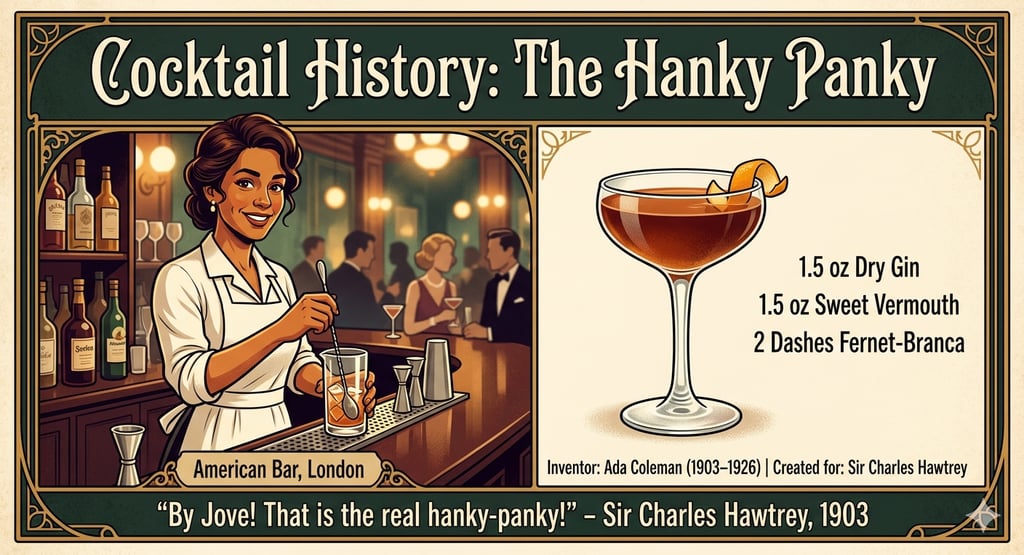
Coleman's impact at the Savoy Hotel was significant. It was here that she honed her craft and showcased her exceptional talent for mixology. Every drink she created was more than just a cocktail; it was a harmonious blend of flavors crafted with precision and flair. One of her most famous creations, the "Hanky Panky," exemplified her innovative spirit and desire to elevate the cocktail experience. This signature drink not only captivated the patrons but also contributed to her growing reputation as one of the top bartenders of her time.
The legacy of Ada Coleman continues to inspire a new generation of bartenders and cocktail enthusiasts. Her journey at the Savoy Hotel not only established her as a prominent figure in the bartending world but also paved the way for future women in the hospitality industry. As she broke barriers and redefined the bartender's role, her commitment to excellence resonates in today's vibrant cocktail culture.
The Creation of the Hanky Panky Cocktail
The Hanky Panky cocktail was created in the early 20th century by Ada Coleman, a pioneering bartender at the Savoy Hotel in London. This iconic drink is a delightful blend of sweet vermouth, gin, and a unique ingredient: Fernet-Branca, an Italian digestif known for its complex, bitter flavor. The creation of this cocktail can be traced back to a legendary moment when a distinguished guest, Sir Charles Henry Gill, requested something new from Coleman. Inspired by his desire for an adventurous cocktail, she creatively combined these ingredients, giving birth to what would become the Hanky Panky.
The inspiration behind the Hanky Panky cocktail extends beyond mere experimentation. At a time when cocktails were gaining popularity, Coleman sought to craft a drink that balanced sweetness with an intriguing bitterness, appealing to a more refined palate. Fernet-Branca added a distinctive character that would set the Hanky Panky apart from other cocktails of that era. The choice of gin served as a nod to the drink’s British origins, while sweet vermouth lent a rich depth, creating a harmonious blend that caters to a diverse audience. The drink's name itself is said to have emerged from Gill's reaction upon tasting the cocktail, exclaiming it was "not too bad, a bit of Hanky Panky, isn’t it?"
Challenges Faced as a Female Bartender
Ada Coleman entered the bartending profession at a time when societal attitudes largely deemed it unsuitable for women. The late 19th and early 20th centuries were characterized by male dominance in many fields, including bartending, which was often perceived as a rugged, masculine profession. As a result, women aspiring to work behind the bar faced numerous challenges, ranging from skepticism regarding their abilities to outright discrimination. Women's roles were typically confined to domestic spheres, and venturing into such a male-dominated industry was frowned upon.
The stereotype that women lacked the necessary strength or knowledge to be proficient bartenders was prevalent. Nonetheless, Ada Coleman, with her natural talent and dedication, broke through these barriers. She took up her position at the prestigious Savoy Hotel in London, where she would eventually earn acclaim for her innovative cocktails and impeccable service. Coleman's achievements were not only a testament to her skills but also a challenge to the prevailing misogynistic attitudes of her time.
Overcoming these obstacles required immense resilience. Coleman had to constantly prove her competence and worth in a work environment where she was often subjected to scrutiny and bias. Networking with both patrons and colleagues became essential for her to establish credibility. By leveraging her creativity and establishing rapport with customers, she showcased her expertise in crafting quality cocktails, gradually earning respect within the profession.
Furthermore, Coleman often had to navigate a delicate balance between maintaining her femininity and asserting her authority without alienating her male counterparts. This balancing act was crucial for her success, as she paved the way for future generations of women in bartending. Through her determination and skill, Ada Coleman not only challenged the norms of her time but also laid the foundation for a more inclusive environment in the cocktail world.
Influence on Cocktail Culture
Ada Coleman, often regarded as a pioneer in the field of mixology, has left an indelible mark on cocktail culture. Serving as head bartender at the Savoy Hotel in London, she innovated numerous techniques and recipes that elevated the craft of bartending. Her approach not only focused on the balance of flavors but also embraced the art of presentation, which was relatively uncommon in her era. Her signature cocktail, the Hanky Panky, exemplifies her knack for combining unexpected ingredients to create a harmonious drink that remains popular today.
Coleman's influence extended beyond her inventive cocktails. She actively championed the idea of personal expression in mixology, encouraging bartenders to develop their distinct styles and techniques. This sentiment was revolutionary at a time when the profession was dominated by men and often viewed as a mere service role. By breaking through societal norms, Coleman paved the way for future generations of women in the bartending profession, inspiring many to pursue careers that were traditionally inaccessible to them.
Recognition and Legacy
Ada Coleman, renowned for her innovative mixology and barmanship in the early 20th century, garnered significant recognition during her illustrious career at the Savoy Hotel in London. As one of the first female head bartenders, she was a pioneer in a predominantly male industry, breaking down barriers and setting a precedent for future generations. Her signature cocktail, the Hanky Panky, became famous and remains a staple in cocktail menus worldwide, demonstrating her lasting influence on mixology.
Throughout her career, Coleman received numerous accolades for her contributions to the cocktail world, though it must be noted that the formal recognition of women in bartending at the time was quite limited. Posthumously, her work has been celebrated by various organizations and cocktail enthusiasts, further solidifying her status as a significant figure in the history of spirits. In recent years, several bartending competitions and awards have included tributes to Coleman's influence, recognizing her role in shaping modern bartending practices.
Today, Ada Coleman's legacy lives on not only in her cocktails but also through the increasing visibility of women in bartending. As the cocktail scene continues to evolve, many bartenders pay homage to her methodologies and unwavering spirit. Industry publications and social media platforms frequently reference her techniques, and she is regarded as a source of inspiration for those aspiring to make their mark in the craft of cocktail making.
In summation, Ada Coleman's contributions to the world of cocktails are still felt today, and her recognition over the years exemplifies how one individual's work can disrupt norms and inspire change in a traditional industry. Her legacy is a testament to the role of innovation and creativity in bartending, ensuring that her name and creations will endure for generations to come.
The Legacy of Ada Coleman
Ada Coleman stands out as an iconic figure in the cocktail world, whose influence extends far beyond her years behind the bar. As one of the first female head bartenders, her groundbreaking contributions challenged the norms of the early 20th century. Coleman not only created the famous Hanky Panky cocktail but also elevated the art of mixology through her creativity and professionalism. Her innovative approach to combining flavors and her emphasis on presentation paved the way for future generations of bartenders.
Through her work at the Savoy Hotel in London, Coleman showcased the potential of cocktails as a refined culinary art, establishing a standard that many aspire to today. Her signature drink, the Hanky Panky, became a symbol of her expertise and has remained a staple in cocktail culture since its inception. This enduring popularity reflects both Coleman's skill and her ability to resonate with the changing tastes of drinkers across eras.
Moreover, Ada Coleman's achievements have inspired countless women to pursue careers in bartending, an industry historically dominated by men. Her legacy serves as a reminder of the important role that women play in the hospitality sector, encouraging diversity and innovation in an ever-evolving field. As the craft cocktail movement continues to flourish, Coleman’s story and her cocktail creations endure as a testament to her pioneering spirit and dedication.
In conclusion, Ada Coleman’s life and work not only transformed the cocktail landscape but also instilled a sense of empowerment among aspiring bartenders. Her lasting impact is evident in modern cocktail culture, where her legacy lives on through the many who seek to emulate her skill and passion for mixology. As the cocktail scene evolves, Ada Coleman remains an enduring inspiration for all who venture behind the bar.