What wine yeast should I use? Yeast Kinetic Trial for 71B, V1116, and RC212 yeast strains.
What wine yeast should I use? This blog post is about a yeast trial I am conducting to see how these different yeast strains perform. Covers the must, yeast re-hydration, and yeast nutrition plan. What I expect will happen. How these trials can be helpful to follow home winemakers and professionals.
YEAST & CULTURESPROJECTS EXPERIMENTS
7/11/20264 min read
Summary
Yeast Kinetic Trial of 71B, V1116, and RC212 yeasts.
Apple Cider with Cherry Must.
Hydrating yeast procedure.
Yeast Nutrition Plan
Organic vs Inorganic Nitrogen
71B expected to metabolize malic acid
V11116 expected to ferment fast and clean.
RC212 expected to bring make the cherry flavor more prominent.
Strategic industry goals such as tank turnaround time, balance acidity with minimal additives, and final outcome of product.
Yeast Kinetic Trial: Between 71B, V1116, AND Bourgovin RC212
By: Chad Huss | Fermented Curiosities
In the world of fermentation, yeast is often treated as a "black box"—you pitch it, wait, and hope for the best. But for the serious beverage maker, yeast is the primary engine of product design. It dictates not just the alcohol content, but the mouthfeel, acid structure, and aromatic profile of the final product.
At Fermented Curiosities, I am officially kicking off a new R&D project: The Yeast Kinetic Trial. Where I will trial a few yeast strains to compare how they performed, and impact on the final product.
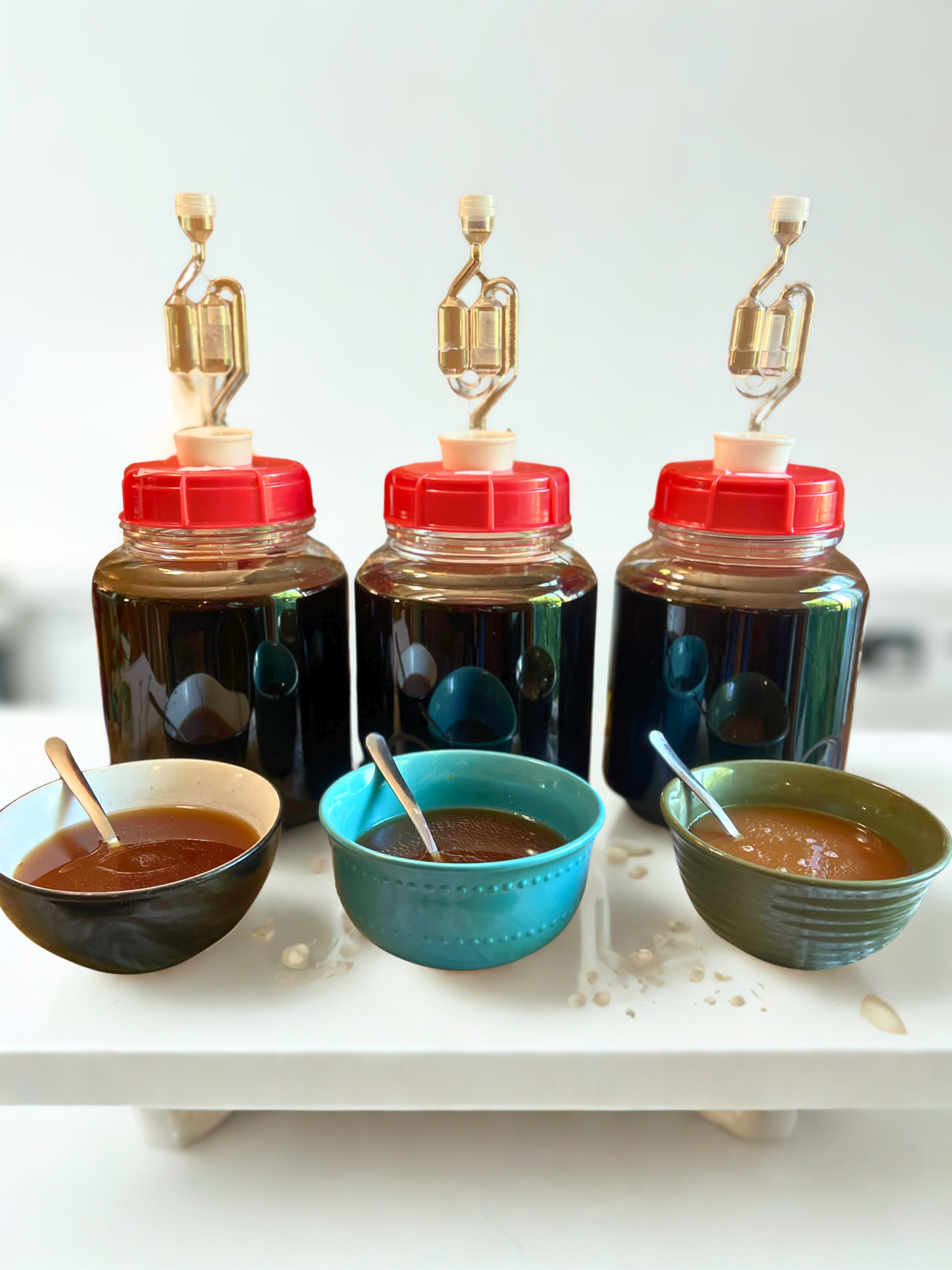
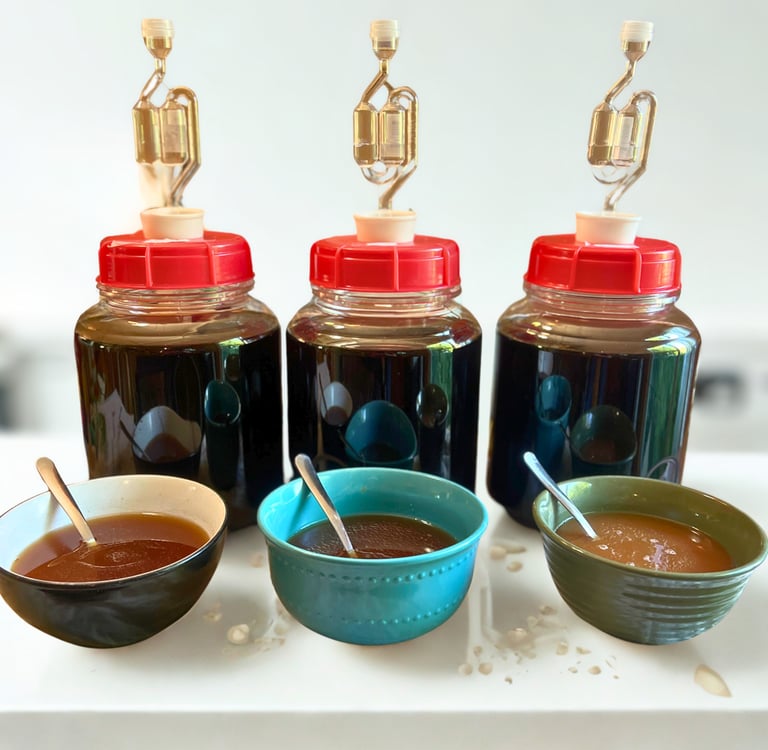
Over the next few weeks, I’ll be testing three professional-grade wine strains—Lalvin 71B, K1-V1116, and RC212—against an identical cherry-cider must that I bought from a local homebrew supply shop. The goal isn't just to see which one "tastes better," but to analyze how these yeasts perform under controlled conditions to produce distinct, repeatable results.
The Experimental Setup
To remove "recipe noise," I have standardized every variable.
The Must: A 3-gallon batch of Brewer’s Best Cider House Select Cherry
Must Specs
1.070 Specific Gravity/17.1 Brix
Potential of 9.5% ABV
3.5 Ph
68.5 degrees
The Control: All batches will be fermented side-by-side in identical temperature conditions to ensure ambient factors do not influence the kinetics.
Rehydration Protocol: To minimize "pitching shock," every strain will be rehydrated using Go-Ferm. This step is non-negotiable for professional-level results, as it provides essential micronutrients and cell-wall sterols before the yeast even touches the must. The following is the yeast hydration I did per yeast.
100 ml water at 102 degrees
Added 3g Go Ferm
Wait 15 minutes
Checked temperature naturally down to 78 degrees
Added 2g Yeast
Wait 15 minutes
Add 100ml of must
Wait 15 minutes
Add 200 ml of must
Staggered Nutrient Management: We are moving beyond the "dump it and forget it" approach. We will be using Fermaid-O (organic nitrogen) added in a staggered nutrient addition (SNA) schedule.
Phase 1 (End of Lag Phase): 1.0g of Fermaid-O to support early biomass growth.
Phase 2 (1/3 Sugar Depletion): Secondary dose to prevent yeast stress as ethanol levels rise.
Why? By feeding the yeast at specific metabolic thresholds, we prevent (H₂S) production and volatile acidity (VA), allowing each strain to express its true aromatic potential rather than showing symptoms of nutrient starvation.
The Nutrient Choice: Organic vs. Inorganic Nitrogen
A common pitfall in fermentation is relying solely on inorganic nitrogen—specifically DAP (Diammonium Phosphate). While DAP is inexpensive and forces a rapid fermentation, it often leads to a "harsh" kinetic profile and can be stressful for the yeast in a fruit-based matrix.
Inorganic Nitrogen (DAP): Think of this as "espresso" for yeast. It provides a sudden, explosive spike of nitrogen. While it gets the fermentation moving, it doesn't provide the complex amino acids, vitamins, and minerals that yeast needs to build healthy cell membranes. Relying on DAP often results in a "clean" but "thin" sensory profile, and it can lead to yeast stress if the environment becomes even slightly difficult.
Organic Nitrogen (Fermaid-O): This is a complex source of nitrogen derived from inactivated yeast cells. It acts as a "slow-release" fuel source. It provides not just nitrogen, but also essential micronutrients and long-chain fatty acids.
The Benefit: By using organic nitrogen, we are encouraging a more natural, sustained fermentation. The yeast builds more robust cell walls, which translates to cleaner ester production, better flocculation, and—most importantly—a lower risk of producing sulfur off-flavors ($H_2S$) or volatile acidity.
In this trial, we are utilizing Fermaid-O exclusively to ensure that any differences we observe in the yeast's performance are a direct result of the strain’s inherent genetics, not a side effect of synthetic nutrient stress.
What We Expect to Learn
While all three strains are top-tier, they have wildly different "personalities" in the cellar:
Lalvin 71B: Known for its ability to metabolize malic acid. We expect this to be our "Mouthfeel Winner," potentially softening the tartness of the cherry.
Lalvin K1-V1116: A classic "workhorse." We expect this to be the fastest fermenter with the cleanest final clarity and highest flocculation.
Lalvin RC212: The "Specialist." Primarily used for Pinot Noir, we are excited to see if its ability to structure red fruit profiles translates to this cherry-cider base, though we’ll be monitoring it closely for nitrogen requirements.
Why This Matters
Whether you are a home enthusiast or a commercial producer, understanding these kinetics changes your process. It allows you to select a yeast based on strategic goals—like shortening tank turnaround times or naturally balancing acidity without additives—rather than just grabbing whichever packet is in the fridge.
Stay tuned. Over the coming weeks, I’ll be documenting the data on lag times, pH shifts, and sensory outcomes. I’ll also be releasing dedicated deep-dive technical reports on each of these three strains.
For the Professionals If you are currently working in the beverage industry—whether in production, quality control, or product development—I’ll be sharing a more targeted, industry-focused summary of these findings over on LinkedIn. We’ll be diving deeper into the production times, COGS reduction, and protocol management. I invite you to join the discussion there as we bridge the gap between bench-top trials and full-scale production.
Want to follow the raw data? Subscribe to our blog, or follow us on any of our social media channels.
Join
Sign up for recipes, tips, and expert advice
Contact
Subscribe
hello@fermentedcuriosities.com
© 2026. All rights reserved.