
What is a fast fermenting reliable wine yeast?
What is a fast fermenting reliable wine yeast? Unlock the potential of Lalvin K1-V1116 yeast with our deep dive into manufacturer specs, fermentation kinetics, and nutrient management. Learn how this robust, floral-ester-producing strain can elevate your white wines, meads, and cider ferments.
YEAST & CULTURES
7/15/20262 min read

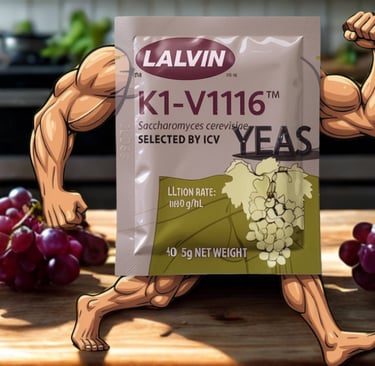
Quick Summary: Lalvin K1-V1116
Optimal Temperature Range: 10°C–35°C (50°F–95°F).
Alcohol Tolerance: Up to 18% ABV.
Inoculation Rate: 0.2–0.4 g/L.
Key Characteristics: High floral ester production (isoamyl acetate, hexyl acetate, phenyl ethyl acetate), low nitrogen requirements, and high resilience in low-turbidity musts.
Primary Benefits: Exceptional at suppressing wild yeasts, produces very low levels of hydrogen sulfide (H2S) and foam, and is a proven choice for restarting stuck fermentations.
Deep Dive: Unlocking Potential with Lalvin K1-V1116
Lalvin K1-V1116 is widely recognized as one of the most robust, versatile yeast strains in the professional winemaker’s toolkit. Originally isolated in 1972 by Pierre Barre of the INRA Montpellier in France, this strain was the first commercial "killer factor" (K2) yeast, designed to excel in challenging fermentation environments.
Technical Specifications & Manufacturer Data
For those managing fermentation kinetics, K1-V1116 provides exceptional reliability across a broad spectrum of conditions:
Nitrogen Requirements: Low to average; its ability to thrive in low-nutrient musts makes it a top choice for difficult or stuck fermentations.
Fermentation Performance: Known for a particularly short lag phase and moderate-to-fast fermentation rates.
Aromatic Profile: Produces significant floral esters—such as banana and fresh red fruit—when fermented at temperatures below 16°C (61°F).
Safety & Stability: Produces low levels of volatile acidity and H2S, ensuring clean results.
Best Applications
Whether you are producing professional-grade wines or experimental craft beverages, K1-V1116 is highly adaptable:
White & Rosé Wines: Excellent for enhancing varieties like Sauvignon Blanc, Chenin Blanc, and Pinot Grigio by boosting floral and fruity notes.
Fruit Wines & Ciders: Its ability to retain fresh fruit character and handle low-nutrient musts makes it a gold standard for apple, pear, and berry-based ferments.
Mead: Highly effective for meadmakers seeking a clean, aromatic fermentation that allows the quality of honey and added ingredients to shine.
Sparkling Wines: Frequently used in both traditional and Charmat methods for its contribution to crisp acidity and bright aromatics.
Daily Status Updates
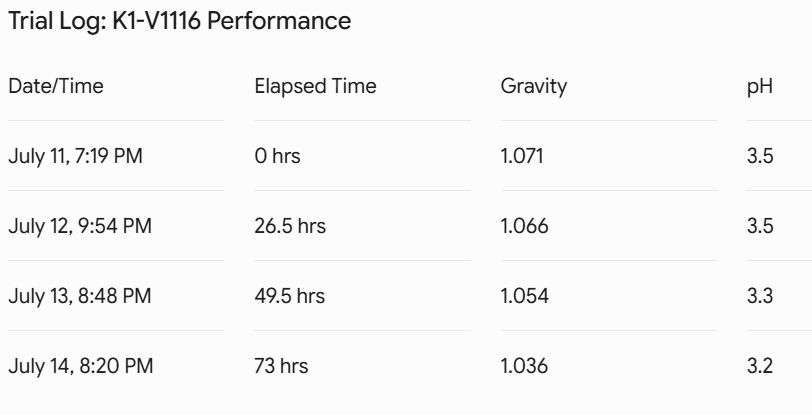
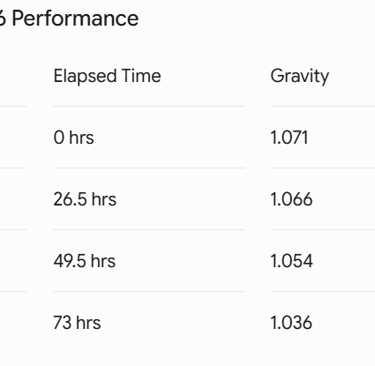
July 12 (26.5 hours post-inoculation): Fermentation has initiated with a slight gravity drop from 1.071 to 1.066. The yeast is currently in its lag phase, adapting to the must environment while maintaining a stable pH of 3.5 and a temperature of 61°F.
July 13 (49.5 hours post-inoculation): Fermentation activity has picked up significantly, with gravity dropping to 1.054. The pH has begun its expected decline to 3.3, and the must is maintaining a healthy temperature of 62°F.
July 14 (73 hours post-inoculation): The strain is showing a steady, controlled descent in gravity to 1.036. Over the period, the pH has dropped to 3.2, indicating healthy metabolic activity and organic acid production. The fermentation temperature is holding steady at approximately 62°F, sitting perfectly within the preferred range for encouraging delicate ester development.
References
Lallemand Oenology: Lalvin K1-V1116 Product Data Sheet & Technical Information. (Manufacturer specifications and strain history).
Join
Sign up for recipes, tips, and expert advice
Contact
Subscribe
hello@fermentedcuriosities.com
© 2026. All rights reserved.